
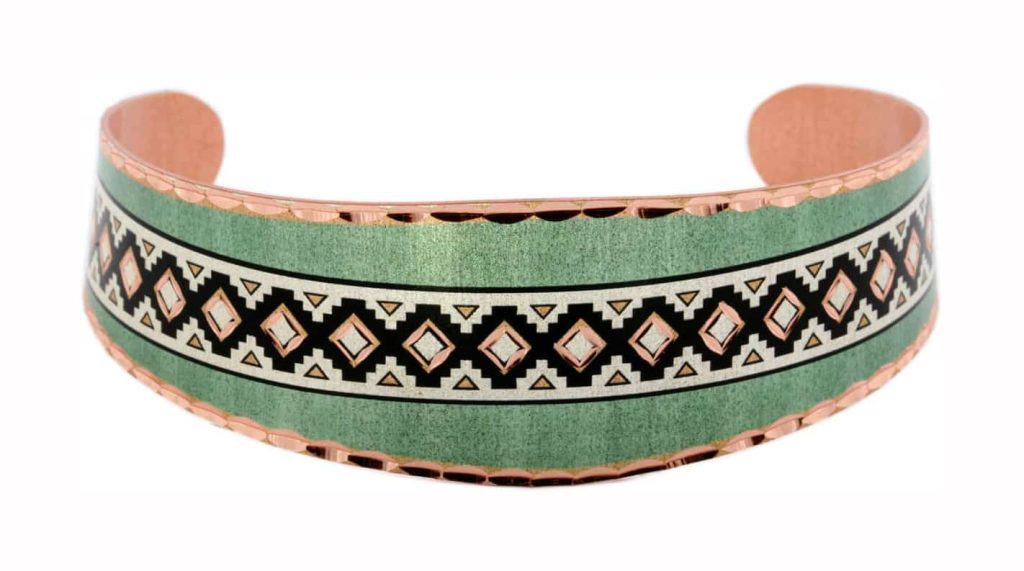
Tips for Making Handcrafted Copper Jewelry with Patinas
How to Create Handcrafted jewellery Using Patinas
Using the Correct Patina Solutions
How to make jewellery using patinas: creating incredible layers of colour on your extraordinary copper jewelry is easily achieved with Liver of Sulphur. This wondrous chemical compound oxidizes many different metals, creating fantastic colours on your earrings and bracelets, making your best copper jewelry. The variety of colours that can be achieved is incredible, ranging from gold to black and everything in between. No other chemical can produce such wide-ranging colour patterns on the surface of a variety of metals, including silver and copper jewelry.
Taking Safety Measures When Using Patinas
Working in a well-ventilated area is a definite must; outdoors is preferable. The odor of rotten eggs given off by the sulphur can be overwhelming in a closed area. It is easy to be put off by the smell, but the results are excellent.

Making the Patina Solutions
The liver of sulphur comes in two types. The liquid form can be used straight from the bottle, but the shelf life is unpredictable even when stored in a cool, dark place. Solid sulphur is usually sold in small chunks, which are mixed as needed. For this reason, it is better to buy small amounts of the solid and mix only what you need to create the most beautiful handcrafted copper jewellery.
For your solution, place a 1 cm or 1/4 inch clump of solid liver of sulphur in a glass or plastic container with about 1 cup of water. The colour of the solution should be very pale yellow. A strong solution will develop the colours too quickly to stop the process at your desired colour, while a too-weak solution can take too long and build a thick, flaky crust. Experiment to determine the optimal concentration of the metal you are working with to achieve the results you want.
Achieving Different Patina Colors
Set up your workstation so you can easily go from one step to the next. Have a heat source, the liver of sulphur solution, a cold water bath, and finally a soapy baking soda rinse. The secret to controlling the process is the solution strength and the temperature. The hotter solution will react more quickly, and the colours will move faster from one colour to the next. They roughly go from gold, pink, blue, purple, gray, and finally black.
How to Apply Patina to Copper jewellery
To create handcrafted jewellery using patinas, before you begin, your patina copper bracelet piece should be clean and free from dirt or oils from your hands. Wearing gloves throughout the process would be better. The liver of sulphur will begin to react the instant you put handmade bracelets or handmade earrings into it. Let the colour develop on the handmade jewellery piece for a couple of seconds, then place it in cold water to stop the patina from forming.
Repeat these steps until you reach the desired color. Finally, rinse the piece in a soapy baking-soda solution to remove any liver of sulphur residue that could continue to alter the patina’s colour. Do not rub the handcrafted jewellery piece with the baking soda mixture, as any abrasive will damage the patina finish you have worked hard to create.
The patina of sulphur produces a finish on metal handmade jewellery, but if not treated, the effects will wear off over time. Use a clear lacquer finish to protect your handmade earrings and bracelets with their new patina finish. Be adventurous and see how a little colour can transform your handmade jewelry into a masterpiece!
This article is an original article by Jennifer Hisir of Handmade jewellery by Copper Reflections and may be reprinted as long as the hyperlinks are kept intact with working links.


Comments are closed.